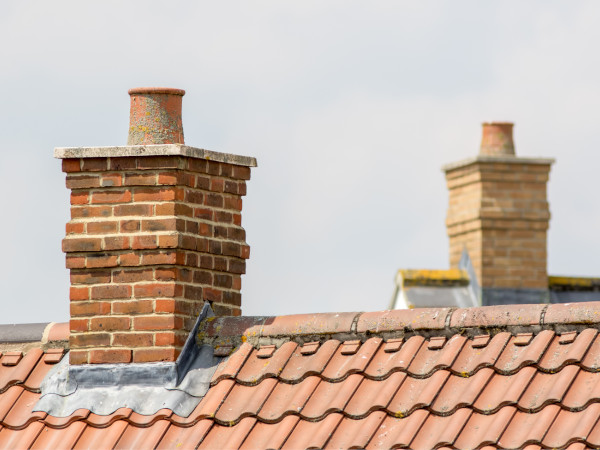
Why Sealed Chimneys Often Stay Damp – Even Without an Active Leak
Damp Chimney Breast Problems Explained
Damp chimney breasts are one of the most commonly misdiagnosed issues found during building surveys. They’re often blamed on roof leaks or labelled as rising damp, without proper consideration of how the chimney has been altered over time.
This article explains why sealed or redundant chimneys frequently remain damp, even when there is no obvious active water ingress.
How Traditional Chimneys Were Designed to Manage Moisture
Older chimneys were never intended to be sealed. When in use, they allowed continuous airflow through the flue, which helped to:
- Encourage evaporation from internal masonry
- Remove incidental moisture entering the structure
- Prevent long-term moisture build-up
In short, traditional chimneys were designed to breathe.
What Happens When a Chimney Is Sealed or Capped
When a chimney is capped with a solid slab or sealed without ventilation, its moisture behaviour changes significantly.
Moisture can still enter the chimney structure through routes such as:
- Defective flashings and roof junctions
- Deteriorated chimney crowns or mortar joints
- Lateral moisture tracking from flat roof abutments
- Historic rainfall entry before the chimney was sealed
Once inside, the problem is not always the source of moisture — it’s the lack of evaporation.
Condensation Inside a Sealed Chimney Flue
A sealed chimney creates a cold, unventilated void. Under cooler conditions:
- Moisture vapour condenses on the cold internal masonry
- Repeated condensation cycles occur
- The chimney mass gradually becomes damp
This condensation occurs inside the chimney structure, not on the internal room surface, and should not be confused with lifestyle condensation caused by everyday activities.
Why Damp Appears on the Chimney Breast
Chimney masonry is dense and slow to dry. Moisture retained within the structure migrates internally and typically presents at the chimney breast.
Common symptoms include:
- Localised damp patches
- Plaster deterioration at low to mid level
- Salt contamination
- High deep moisture meter readings
In many cases, no damp staining appears at ceiling level, even when roof-level defects exist. This is because the masonry absorbs and stores moisture rather than allowing it to drip through as free water.
Why Sealed Chimney Damp Is Often Misdiagnosed
Because the symptoms resemble other damp problems, sealed chimney issues are frequently misidentified as:
- Rising damp
- Active roof leaks
- Internal condensation
Without understanding chimney ventilation and moisture behaviour, treatments often address the symptoms rather than the underlying cause.
The Correct Way to Resolve Damp Chimney Breasts
Effective resolution focuses on moisture control, not guesswork. This typically involves:
- Reinstating ventilation to the chimney flue
- Addressing roof-level defects and flashing issues
- Allowing time for the chimney masonry to stabilise
- Managing residual moisture and salts internally where required
In some cases, internal membrane systems are used to manage salt contamination and residual moisture while the structure returns to equilibrium.
Final Thoughts on Damp in Redundant Chimneys
Sealing a chimney may seem like a sensible way to prevent rain ingress, but without ventilation it can create long-term moisture problems that do not behave like typical leaks.
Correct damp diagnosis requires understanding how buildings were designed to work, and how later alterations can disrupt that balance.
If you are experiencing dampness to a chimney breast and have been advised to install chemical damp-proofing or injections, it is worth first considering whether the chimney has been sealed and how moisture is being managed.